Is homebirth safe?
Birth has a wide range of normal. Midwives work with healthy people, healthy pregnancies, and healthy babies because they represent the lowest risk population for whom all the options--including out of hospital birth--should be available. However, we are also trained to manage complications of birth, and ocassionally situations arise that we resolve quickly and professionally, either at home or by transferring to the hospital. Typically, once resolved, families stay at home. We always make a plan ahead of time during prenatal care. To learn more about the outcomes of homebirths in the United States, check out “Outcomes of planned home births with certified professional midwives,” from the BMJ.
Who will be at my birth?
Anyone you want! I have attended births with extended family members, kids, best friends, multiple polyamorous partners, doulas, pets, and even a squirrel. A second trained midwife or midwifery assistant will also attend your birth, whom you will meet at a prenatal appointment.
What do I need for a homebirth?
You will purchase a birth kit from In His Hands. The birth kit contains all the supplies we need for your birth and postpartum. Additionally, I provide a list of items to have on hand for birth.
Is homebirth messy?
Typically homebirth is not messy, and we make sure that your space is ready for birth, which includes protecting surfaces where you might have your baby using disposable underpads. We don’t leave until your space is clean, the trash has been taken out, and the laundry is in the wash.
Do you offer waterbirth?
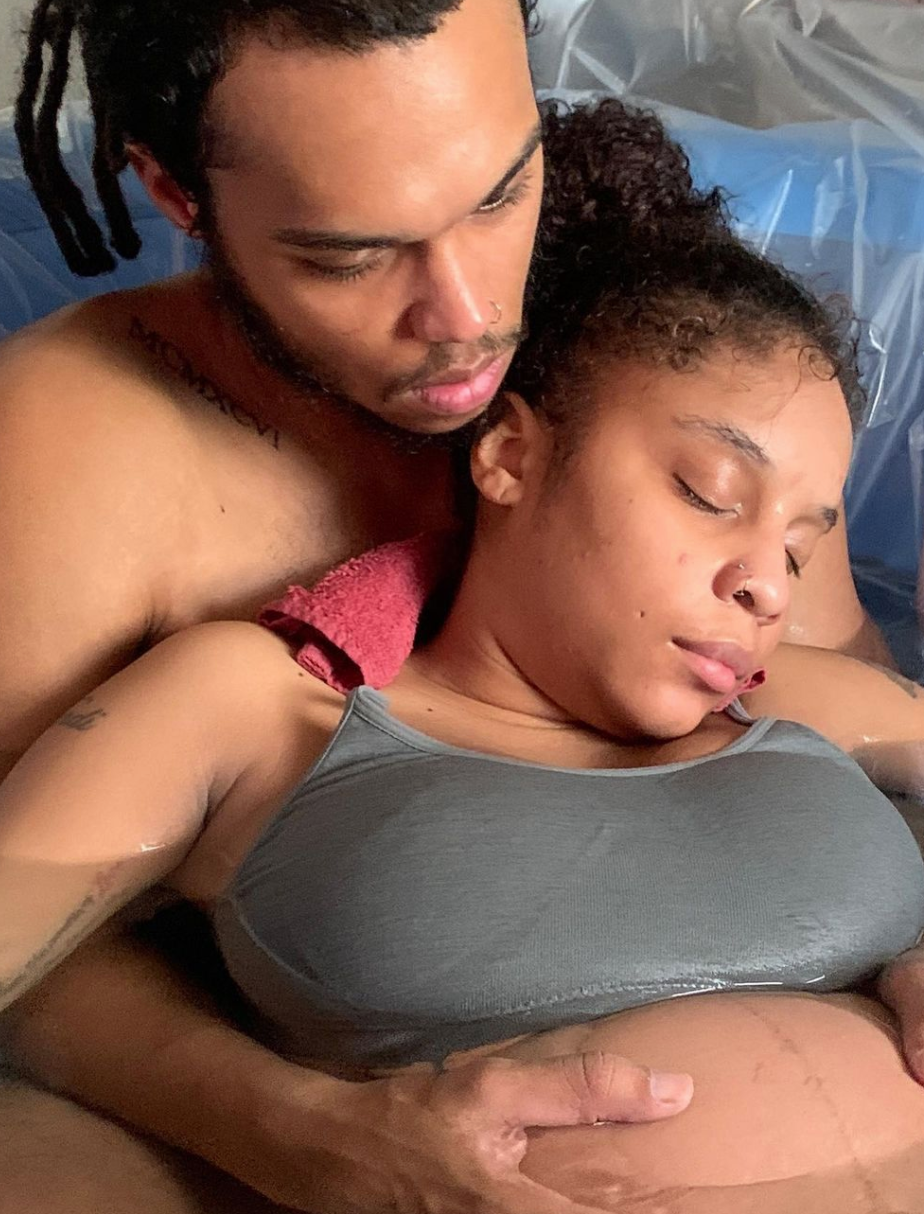
Yes! I have a birthtub and air pump available to my clients. Clients order a tub liner, hose, and hose adaptor in their birth kit. We clean and pack up the tub after you have your baby.
What if I need to go to the hospital?
No one wants to see a planned home birth end in transfer, and it's important to us that our transfers are as smooth and kind as possible. We discuss transfer during a prenatal appointment and make a plan for where we would go. We have great relationships with various practices in PA and NJ and we love them for the ways that their midwives and doctors demonstrate respect, compassion, and professionalism to our clients.
The most common hospital transfer scenario is a long labor and a desire for pain relief and rest, and less common scenarios include retained placenta, excessive blood loss, or a baby who needs additional respiratory support. According to the MANA planned homebirth study, roughly 12% of parents were transferred during labor, and only 1% of a babies are transferred to the hospital postpartum. In 2023, my transfer rate was just under 1:10 births.
Where do you attend homebirths?
I attend births within roughly an hour of Trenton, NJ.
What does homebirth cost?
My fee is $7000 for complete midwifery services to be paid in full by 37 weeks, including prenatal care, labor and birth support from your birth team, and postpartum care. Though I provide all routine lab work, there may be additional costs depending on your insurance coverage, though typically standard prenatal labs are covered in full by insurance. If not, I work with you to keep these lab fees as low as possible. Ultrasounds are also typically covered by insurance, and I can help uninsured clients receive lower-cost ultrasound.
**I do offer discounted rates for various circumstances so please don't hesitate to reach out and ask. **
Does insurance cover homebirth?
I am not in-network with any insurance plans, however, I will advise you on insurance reimbursement.